World - Bananas - Market Analysis, Forecast, Size, Trends And Insights
Get instant access to more than 2 million reports, dashboards, and datasets on the IndexBox Platform.
View PricingGlobal Banana Market's Volume to Reach 162 Billion Units and Value $175 Billion by 2035 Amid Supply Chain and Disease Pressures
IndexBox has just published a new report: World - Bananas - Market Analysis, Forecast, Size, Trends And Insights.
The global banana market is on a path of steady expansion, with production volume projected to grow from 113.3 billion units in 2012 to 162.1 billion in 2035 and consumption value to reach $175.4 billion. Growth is fueled by rising populations and demand in emerging economies like India, China, and Nigeria. However, the market faces significant headwinds including supply chain disruptions, price sensitivity, and the existential threat of diseases like Fusarium wilt TR4. The export market is highly consolidated, led by Ecuador in volume and value, with major multinationals like Dole and Chiquita dominating. While the Cavendish variety dominates trade, market segmentation into other varieties and processed products offers diversification.
Key Findings
- Global banana production and consumption are projected for steady growth, reaching 162.1 billion units and $175.4 billion in value by 2035
- Ecuador dominates global exports, forecast for 6.3 billion units and $3.7 billion in value by 2035, with Latin America central to supply chains
- India and China are the top consumption markets by volume, while Nigeria emerges as a major high-growth market in value terms
- The market faces major restraints from disease (TR4), climate volatility, price sensitivity, and rising sustainability compliance costs
- Export trade is highly consolidated among multinationals, with competition evolving around branding, certifications, and processed product segments
Global Banana Market Faces Supply Chain Headwinds Amidst Rising Demand
According to the latest market intelligence from IndexBox, the global banana trade is navigating a complex landscape of shifting production patterns and evolving consumer demand. The data reveals a market in steady expansion, with world production volume projected to grow from approximately 162.1 billion units in 2035, up from 113.3 billion in 2012. This growth trajectory is underpinned by rising populations and increasing per capita consumption in emerging economies, though it is tempered by logistical challenges and price sensitivity in key importing regions. The full dataset is accessible via the IndexBox platform.
Export Volume & Export Value
Global banana export volume has demonstrated a consistent upward trend, climbing from 10.1 billion units in 2012 to a projected 26.2 billion units by 2035. This near-tripling of trade volume underscores the fruit's status as a truly global commodity. The historical period from 2012 to 2018 saw robust growth, with volumes reaching 23.5 billion units, before a notable dip in 2023 to 17.6 billion units—a potential reflection of supply chain disruptions or climatic events. The forecast from 2024 onward shows a resumption of growth, albeit at a more moderate pace. Regionally, Ecuador stands out as the volume leader, with its exports forecast to rise from 6.3 billion units in 2035, cementing its dominance. The Philippines and Costa Rica are other major volume players, with Guatemala and Colombia also contributing significant shipments, highlighting Latin America's central role in global banana supply chains.
Mirroring the volume expansion, global export value has also risen significantly, from $6.0 billion in 2012 to a forecasted $12.4 billion in 2018, with a further climb to $17.6 billion projected for 2035. This increase in value has not always kept pace with volume growth, indicating periods of price pressure. Ecuador again leads in value terms, with exports projected at $3.7 billion in 2035. Costa Rica follows as a high-value exporter, with its 2035 forecast at $1.9 billion, demonstrating its ability to command premium prices. The Philippines, while a major volume exporter, shows value figures that suggest a focus on different market segments or price points. The data indicates that while volume growth is strong, value realization for exporters is contingent on quality, branding, and access to premium markets.
Consumption Volume & Consumption Value
World banana consumption volume paints a picture of a staple in high demand, growing from 118.5 billion units in 2012 to a forecast of 158.8 billion units in 2035. This steady climb is primarily driven by population growth and the fruit's affordability and nutritional profile. The historical data shows some volatility, with a peak in 2015 at nearly 119.9 billion units followed by fluctuations, likely tied to production variances. The forecast from 2024 shows a return to consistent annual growth. Country-level analysis reveals India and China as the undisputed volume giants. India's consumption is projected to swell from 26.5 billion units in 2012 to 37.5 billion in 2035, while China's growth is more moderate but from a massive base, expected to reach 13.5 billion units by 2035. Nigeria and Indonesia are also major growth markets, with consumption volumes expanding rapidly due to demographic and economic factors.
The global consumption value story is one of a market expanding in both scale and worth, rising from $108.5 billion in 2012 to a projected $175.4 billion in 2035. This value growth generally outpaces volume, suggesting an overall increase in unit prices or a shift toward higher-value banana products. China and India dominate in value terms as well, with China's market valued at $13.9 billion in 2035 and India's at a staggering $21.7 billion. Notably, Nigeria's consumption value is forecast to reach $15.0 billion by 2035, highlighting its significance as a high-growth, high-value market. Brazil and Indonesia round out the top consumers by value. The divergence between volume and value growth in certain regions points to increasing disposable income and potential for branded or premium banana offerings.
Market Forecast
The global banana market is poised for steady growth through 2035, driven by the fundamental drivers of population expansion and the fruit's entrenched position as an affordable source of nutrition. The IndexBox data projects world production volume to reach 162.1 billion units and consumption value to hit $175.4 billion by the end of the forecast period. This growth, however, will be nuanced. Volume expansion will be most pronounced in high-population Asian and African nations, while value growth may accelerate in markets with rising middle-class consumers open to premium, organic, or fair-trade certified bananas. The forecast also suggests that export trade will continue to consolidate around major Latin American producers like Ecuador and Costa Rica, who benefit from established logistics and quality standards. Challenges from climate variability, disease pressure (notably TR4), and rising production costs will likely constrain growth rates and contribute to price volatility, making supply chain resilience and sustainable farming practices critical for long-term market stability.
Market Drivers and Restraints
The banana market is propelled by several key drivers. Firstly, global population growth, particularly in tropical regions where bananas are a dietary staple, ensures a expanding baseline demand. Secondly, rising health consciousness continues to bolster the fruit's image as a convenient and nutritious snack. Thirdly, improvements in cold chain logistics and ripening technologies have extended shelf life and enabled access to distant markets. Finally, the development of value-added products, such as banana chips, purees, and baby food, opens new revenue streams beyond fresh fruit.
Conversely, significant restraints challenge the industry. The monoculture nature of commercial Cavendish production makes it highly vulnerable to fungal diseases like Fusarium wilt Tropical Race 4 (TR4), which poses an existential threat to major exporting regions. Secondly, the market is characterized by extreme price sensitivity and intense competition, often squeezing producer margins, especially for smaller farmers. Thirdly, climate change-induced weather volatility—including hurricanes, droughts, and temperature shifts—directly impacts yields and harvest cycles. Additionally, increasing scrutiny and costs related to sustainability certifications, fair trade practices, and pesticide regulations add complexity and expense to the supply chain.
Competitive Landscape and Leading Brands
The global banana market is highly consolidated at the export level, dominated by a handful of multinational corporations that control production, logistics, and ripening facilities. Leading players include Dole Food Company, Chiquita Brands International (part of the Cutrale-Safra group), Del Monte Fresh Produce, and Fyffes. These companies own or source from vast plantations in Latin America and the Philippines, operating integrated supply chains from farm to retail. The market also features strong competition from numerous local and regional producers who supply domestic and neighboring markets, particularly in Asia and Africa. The competitive dynamic is increasingly influenced by retailers' private-label brands, which exert significant price pressure, and by the growing segment of certified organic and fair-trade bananas, where companies like AgroFair are notable. Innovation in packaging, branding (e.g., premium "finger" bananas), and sustainability narratives are key differentiators in this competitive space.
Market Segmentation by Product Type
The banana market is primarily segmented by variety and product form. The Cavendish variety dominates international trade, accounting for the vast majority of exports due to its thick skin, durability in transport, and consistent quality. However, other varieties like plantains (cooking bananas), Lady Finger, and Red bananas hold significant market share in local and regional contexts, particularly in Africa, Latin America, and Asia. Beyond fresh fruit, the processed banana segment is substantial and growing. This includes banana chips (a popular snack food), banana puree (used in infant food, dairy, and bakery industries), dehydrated bananas, and banana flour. The beverage industry also utilizes bananas in smoothies and specialty drinks. This segmentation allows producers to diversify risk and capture value across different consumer use cases and price points.
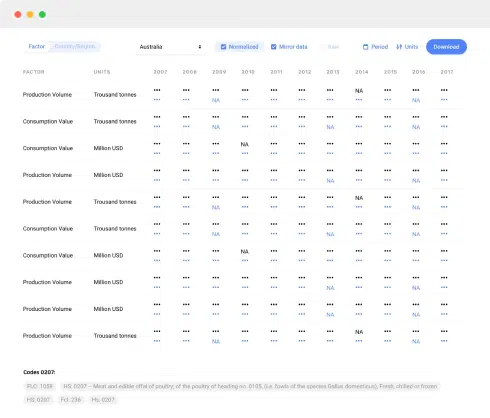
This report provides an in-depth analysis of the global banana market. Within it, you will discover the latest data on market trends and opportunities by country, consumption, production and price developments, as well as the global trade (imports and exports). The forecast exhibits the market prospects through 2030.
Product coverage:
- FCL 486 - Bananas
Country coverage:
Worldwide - the report contains statistical data for 200 countries and includes detailed profiles of the 50 largest consuming countries:
- USA
- China
- Japan
- Germany
- United Kingdom
- France
- Brazil
- Italy
- Russian Federation
- India
- Canada
- Australia
- Republic of Korea
- Spain
- Mexico
- Indonesia
- Netherlands
- Turkey
- Saudi Arabia
- Switzerland
- Sweden
- Nigeria
- Poland
- Belgium
- Argentina
- Norway
- Austria
- Thailand
- United Arab Emirates
- Colombia
- Denmark
- South Africa
- Malaysia
- Israel
- Singapore
- Egypt
- Philippines
- Finland
- Chile
- Ireland
- Pakistan
- Greece
- Portugal
- Kazakhstan
- Algeria
- Czech Republic
- Qatar
- Peru
- Romania
- Vietnam
+ the largest producing countries
Data coverage:
- Global market volume and value
- Per Capita consumption
- Forecast of the market dynamics in the medium term
- Global production, split by region and country
- Global trade (exports and imports)
- Export and import prices
- Market trends, drivers and restraints
- Key market players and their profiles
Company coverage:
Reasons to buy this report:
- Take advantage of the latest data
- Find deeper insights into current market developments
- Discover vital success factors affecting the market
This report is designed for manufacturers, distributors, importers, and wholesalers, as well as for investors, consultants and advisors.
In this report, you can find information that helps you to make informed decisions on the following issues:
- How to diversify your business and benefit from new market opportunities
- How to load your idle production capacity
- How to boost your sales on overseas markets
- How to increase your profit margins
- How to make your supply chain more sustainable
- How to reduce your production and supply chain costs
- How to outsource production to other countries
- How to prepare your business for global expansion
While doing this research, we combine the accumulated expertise of our analysts and the capabilities of artificial intelligence. The AI-based platform, developed by our data scientists, constitutes the key working tool for business analysts, empowering them to discover deep insights and ideas from the marketing data.
-
1. INTRODUCTION
Making Data-Driven Decisions to Grow Your Business
- REPORT DESCRIPTION
- RESEARCH METHODOLOGY AND THE AI PLATFORM
- DATA-DRIVEN DECISIONS FOR YOUR BUSINESS
- GLOSSARY AND SPECIFIC TERMS
-
2. EXECUTIVE SUMMARY
A Quick Overview of Market Performance
- KEY FINDINGS
- MARKET TRENDS This Chapter is Available Only for the Professional Edition PRO
-
3. MARKET OVERVIEW
Understanding the Current State of The Market and its Prospects
- MARKET SIZE: HISTORICAL DATA (2012–2024) AND FORECAST (2025–2035)
- CONSUMPTION BY COUNTRY: HISTORICAL DATA (2012–2024) AND FORECAST (2025–2035)
- MARKET FORECAST TO 2035
-
4. MOST PROMISING PRODUCTS FOR DIVERSIFICATION
Finding New Products to Diversify Your Business
- TOP PRODUCTS TO DIVERSIFY YOUR BUSINESS
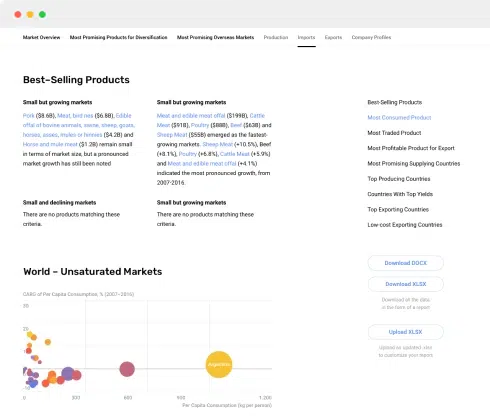
- BEST-SELLING PRODUCTS
- MOST CONSUMED PRODUCTS
- MOST TRADED PRODUCTS
- MOST PROFITABLE PRODUCTS FOR EXPORT
-
5. MOST PROMISING SUPPLYING COUNTRIES
Choosing the Best Countries to Establish Your Sustainable Supply Chain
- TOP COUNTRIES TO SOURCE YOUR PRODUCT
- TOP PRODUCING COUNTRIES
- COUNTRIES WITH TOP YIELDS
- TOP EXPORTING COUNTRIES
- LOW-COST EXPORTING COUNTRIES
-
6. MOST PROMISING OVERSEAS MARKETS
Choosing the Best Countries to Boost Your Export
- TOP OVERSEAS MARKETS FOR EXPORTING YOUR PRODUCT
- TOP CONSUMING MARKETS
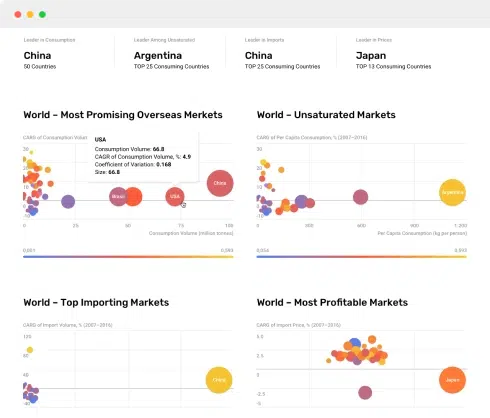
- UNSATURATED MARKETS
- TOP IMPORTING MARKETS
- MOST PROFITABLE MARKETS
-
7. PRODUCTION
The Latest Trends and Insights into The Industry
- PRODUCTION VOLUME AND VALUE: HISTORICAL DATA (2012–2024) AND FORECAST (2025–2035)
- PRODUCTION BY COUNTRY: HISTORICAL DATA (2012–2024) AND FORECAST (2025–2035)
- HARVESTED AREA AND YIELD BY COUNTRY: HISTORICAL DATA (2012–2024) AND FORECAST (2025–2035)
-
8. IMPORTS
The Largest Import Supplying Countries
- IMPORTS: HISTORICAL DATA (2012–2024) AND FORECAST (2025–2035)
- IMPORTS BY COUNTRY: HISTORICAL DATA (2012–2024) AND FORECAST (2025–2035)
- IMPORT PRICES BY COUNTRY: HISTORICAL DATA (2012–2024) AND FORECAST (2025–2035)
-
9. EXPORTS
The Largest Destinations for Exports
- EXPORTS: HISTORICAL DATA (2012–2024) AND FORECAST (2025–2035)
- EXPORTS BY COUNTRY: HISTORICAL DATA (2012–2024) AND FORECAST (2025–2035)
- EXPORT PRICES BY COUNTRY: HISTORICAL DATA (2012–2024) AND FORECAST (2025–2035)
-
10. PROFILES OF MAJOR PRODUCERS
The Largest Producers on The Market and Their Profiles
-
11. COUNTRY PROFILES
The Largest Markets And Their Profiles
This Chapter is Available Only for the Professional Edition PRO- United States
- China
- Japan
- Germany
- United Kingdom
- France
- Brazil
- Italy
- Russian Federation
- India
- Canada
- Australia
- Republic of Korea
- Spain
- Mexico
- Indonesia
- Netherlands
- Turkey
- Saudi Arabia
- Switzerland
- Sweden
- Nigeria
- Poland
- Belgium
- Argentina
- Norway
- Austria
- Thailand
- United Arab Emirates
- Colombia
- Denmark
- South Africa
- Malaysia
- Israel
- Singapore
- Egypt
- Philippines
- Finland
- Chile
- Ireland
- Pakistan
- Greece
- Portugal
- Kazakhstan
- Algeria
- Czech Republic
- Qatar
- Peru
- Romania
- Vietnam
-
LIST OF TABLES
- Key Findings In 2024
- Market Volume, In Physical Terms: Historical Data (2012–2024) and Forecast (2025–2035)
- Market Value: Historical Data (2012–2024) and Forecast (2025–2035)
- Per Capita Consumption, by Country, 2022–2024
- Production, In Physical Terms, By Country: Historical Data (2012–2024) and Forecast (2025–2035)
- Harvested Area, by Country: Historical Data (2012–2024) and Forecast (2025–2035)
- Yield, by Country: Historical Data (2012–2024) and Forecast (2025–2035)
- Imports, in Physical Terms, by Country: Historical Data (2012–2024) and Forecast (2025–2035)
- Imports, in Value Terms, by Country: Historical Data (2012–2024) and Forecast (2025–2035)
- Import Prices, by Country: Historical Data (2012–2024) and Forecast (2025–2035)
- Exports, in Physical Terms, by Country: Historical Data (2012–2024) and Forecast (2025–2035)
- Exports, in Value Terms, by Country: Historical Data (2012–2024) and Forecast (2025–2035)
- Export Prices, by Country: Historical Data (2012–2024) and Forecast (2025–2035)
-
LIST OF FIGURES
- Market Volume, in Physical Terms: Historical Data (2012–2024) and Forecast (2025–2035)
- Market Value: Historical Data (2012–2024) and Forecast (2025–2035)
- Consumption, by Country, 2024
- Market Volume Forecast to 2035
- Market Value Forecast to 2035
- Market Size and Growth, by Product
- Average Per Capita Consumption, by Product
- Exports and Growth, by Product
- Export Prices and Growth, by Product
- Production Volume and Growth
- Yield and Growth
- Exports and Growth
- Export Prices and Growth
- Market Size and Growth
- Per Capita Consumption
- Imports and Growth
- Import Prices
- Production, in Physical Terms: Historical Data (2012–2024) and Forecast (2025–2035)
- Production, in Value Terms: Historical Data (2012–2024) and Forecast (2025–2035)
- Harvested Area: Historical Data (2012–2024) and Forecast (2025–2035)
- Yield: Historical Data (2012–2024) and Forecast (2025–2035)
- Production, in Physical Terms, by Country: Historical Data (2012–2024) and Forecast (2025–2035)
- Harvested Area, by Country, 2024
- Harvested Area, by Country: Historical Data (2012–2024) and Forecast (2025–2035)
- Yield, by Country: Historical Data (2012–2024) and Forecast (2025–2035)
- Imports, in Physical Terms: Historical Data (2012–2024) and Forecast (2025–2035)
- Imports, in Value Terms: Historical Data (2012–2024) and Forecast (2025–2035)
- Imports, in Physical Terms, by Country, 2024
- Imports, in Physical Terms, by Country: Historical Data (2012–2024) and Forecast (2025–2035)
- Imports, in Value Terms, by Country: Historical Data (2012–2024) and Forecast (2025–2035)
- Import Prices, by Country: Historical Data (2012–2024) and Forecast (2025–2035)
- Exports, in Physical Terms: Historical Data (2012–2024) and Forecast (2025–2035)
- Exports, in Value Terms: Historical Data (2012–2024) and Forecast (2025–2035)
- Exports, in Physical Terms, by Country, 2024
- Exports, in Physical Terms, by Country: Historical Data (2012–2024) and Forecast (2025–2035)
- Exports, in Value Terms, by Country: Historical Data (2012–2024) and Forecast (2025–2035)
- Export Prices, by Country: Historical Data (2012–2024) and Forecast (2025–2035)