British Families Struggle Financially Amid Rising Costs
In a striking financial analysis, it's revealed that the average British family is now PS15,000 poorer annually compared to five years ago. According to Telegraph Money analysis, this significant economic decline is attributed to factors such as higher taxes, elevated mortgage rates, and rising energy bills, placing immense pressure on household budgets since 2020.
The financial landscape remains challenging, with the Bank of England expected to cut interest rates again this week. Nevertheless, experts continue to predict a bleak economic outlook, suggesting that Chancellor Rachel Reeves may need to either slash spending or reduce taxes in an emergency Budget anticipated next month.
Covid-19's unforeseen impact coupled with the ensuing lockdown led to increased demand for more floorspace. Houses, which cost around PS350,000 in January 2020, saw a price increase of PS50,000 by late 2021. As of late 2025, a typical family home with a garden is projected to be worth PS440,000, marking a nearly 25% rise over five years, as per data from the IndexBox platform.
The financial burdens extend beyond property values. The average five-year fixed mortgage rate has climbed from 1.7% in 2020 to about 4.4% today, approximately increasing monthly repayments by PS300. This adds up, requiring an extra PS3,800 annually from families already struggling with stretched budgets.
While the gross income of a median British family rose by 28% primarily due to national salary increments, the effective tax escalation has grown at a slower rate of 24.5%, attributed mainly to National Insurance breaks introduced by Jeremy Hunt. Nonetheless, stealth taxes and other fiscal mechanisms continue to erode disposable incomes significantly.
The Rising Cost of Living
The cost of living crisis remains a daunting issue. Energy bills have witnessed a fourfold increase since 2020, exacerbated by geopolitical tensions such as Russia's invasion of Ukraine. As of now, the energy price cap for typical households stands at PS1,738, an increase of more than PS700 from 2020 figures.
Additionally, council tax has surged, with average Band D rates climbing to PS2,171, further stressing family finances. Essential expenses, from groceries to clothing and leisure, have collectively risen by PS5,000 over the same period, heavily impacting overall family spending.
Email communications from the IndexBox platform confirm similar findings, echoing the substantial increases in daily consumables and lifestyle expenses, indicative of a broader, prolonged economic strain affecting UK families.
1. INTRODUCTION
Making Data-Driven Decisions to Grow Your Business
- REPORT DESCRIPTION
- RESEARCH METHODOLOGY AND THE AI PLATFORM
- DATA-DRIVEN DECISIONS FOR YOUR BUSINESS
- GLOSSARY AND SPECIFIC TERMS
2. EXECUTIVE SUMMARY
A Quick Overview of Market Performance
- KEY FINDINGS
- MARKET TRENDS This Chapter is Available Only for the Professional EditionPRO
3. MARKET OVERVIEW
Understanding the Current State of The Market and its Prospects
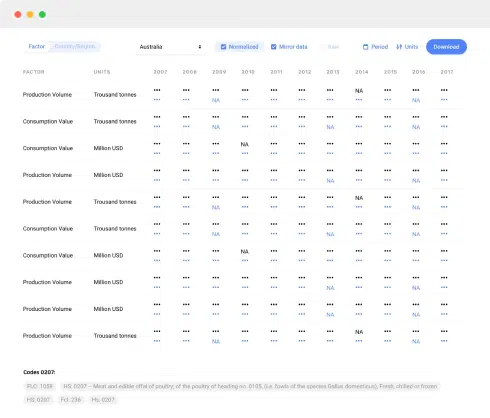
- MARKET SIZE: HISTORICAL DATA (2012–2024) AND FORECAST (2025–2035)
- CONSUMPTION BY COUNTRY: HISTORICAL DATA (2012–2024) AND FORECAST (2025–2035)
- MARKET FORECAST TO 2035
4. MOST PROMISING PRODUCTS FOR DIVERSIFICATION
Finding New Products to Diversify Your Business
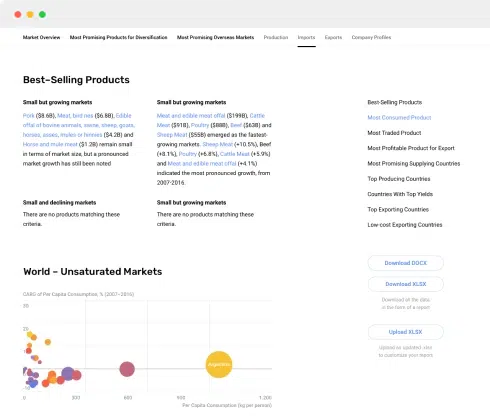
- TOP PRODUCTS TO DIVERSIFY YOUR BUSINESS
- BEST-SELLING PRODUCTS
- MOST CONSUMED PRODUCTS
- MOST TRADED PRODUCTS
- MOST PROFITABLE PRODUCTS FOR EXPORT
5. MOST PROMISING SUPPLYING COUNTRIES
Choosing the Best Countries to Establish Your Sustainable Supply Chain
- TOP COUNTRIES TO SOURCE YOUR PRODUCT
- TOP PRODUCING COUNTRIES
- TOP EXPORTING COUNTRIES
- LOW-COST EXPORTING COUNTRIES
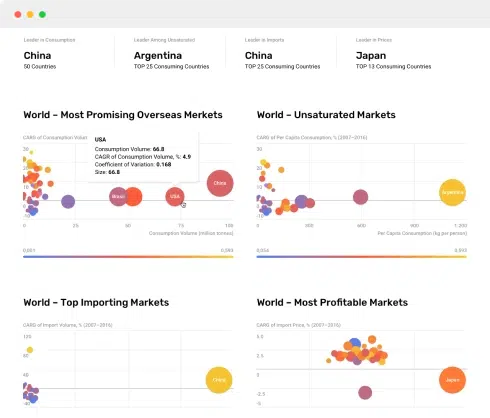
6. MOST PROMISING OVERSEAS MARKETS
Choosing the Best Countries to Boost Your Export
- TOP OVERSEAS MARKETS FOR EXPORTING YOUR PRODUCT
- TOP CONSUMING MARKETS
- UNSATURATED MARKETS
- TOP IMPORTING MARKETS
- MOST PROFITABLE MARKETS
7. PRODUCTION
The Latest Trends and Insights into The Industry
- PRODUCTION VOLUME AND VALUE: HISTORICAL DATA (2012–2024) AND FORECAST (2025–2035)
- PRODUCTION BY COUNTRY: HISTORICAL DATA (2012–2024) AND FORECAST (2025–2035)
8. IMPORTS
The Largest Import Supplying Countries
- IMPORTS: HISTORICAL DATA (2012–2024) AND FORECAST (2025–2035)
- IMPORTS BY COUNTRY: HISTORICAL DATA (2012–2024) AND FORECAST (2025–2035)
- IMPORT PRICES BY COUNTRY: HISTORICAL DATA (2012–2024) AND FORECAST (2025–2035)
9. EXPORTS
The Largest Destinations for Exports
- EXPORTS: HISTORICAL DATA (2012–2024) AND FORECAST (2025–2035)
- EXPORTS BY COUNTRY: HISTORICAL DATA (2012–2024) AND FORECAST (2025–2035)
- EXPORT PRICES BY COUNTRY: HISTORICAL DATA (2012–2024) AND FORECAST (2025–2035)
10. PROFILES OF MAJOR PRODUCERS
The Largest Producers on The Market and Their Profiles
-
11. COUNTRY PROFILES
The Largest Markets And Their Profiles
This Chapter is Available Only for the Professional Edition PRO- United States
- China
- Japan
- Germany
- United Kingdom
- France
- Brazil
- Italy
- Russian Federation
- India
- Canada
- Australia
- Republic of Korea
- Spain
- Mexico
- Indonesia
- Netherlands
- Turkey
- Saudi Arabia
- Switzerland
- Sweden
- Nigeria
- Poland
- Belgium
- Argentina
- Norway
- Austria
- Thailand
- United Arab Emirates
- Colombia
- Denmark
- South Africa
- Malaysia
- Israel
- Singapore
- Egypt
- Philippines
- Finland
- Chile
- Ireland
- Pakistan
- Greece
- Portugal
- Kazakhstan
- Algeria
- Czech Republic
- Qatar
- Peru
- Romania
- Vietnam
LIST OF TABLES
- Key Findings In 2024
- Market Volume, In Physical Terms: Historical Data (2012–2024) and Forecast (2025–2035)
- Market Value: Historical Data (2012–2024) and Forecast (2025–2035)
- Per Capita Consumption, by Country, 2022–2024
- Production, In Physical Terms, By Country: Historical Data (2012–2024) and Forecast (2025–2035)
- Imports, In Physical Terms, By Country: Historical Data (2012–2024) and Forecast (2025–2035)
- Imports, In Value Terms, By Country: Historical Data (2012–2024) and Forecast (2025–2035)
- Import Prices, By Country: Historical Data (2012–2024) and Forecast (2025–2035)
- Exports, In Physical Terms, By Country: Historical Data (2012–2024) and Forecast (2025–2035)
- Exports, In Value Terms, By Country: Historical Data (2012–2024) and Forecast (2025–2035)
- Export Prices, By Country: Historical Data (2012–2024) and Forecast (2025–2035)
LIST OF FIGURES
- Market Volume, In Physical Terms: Historical Data (2012–2024) and Forecast (2025–2035)
- Market Value: Historical Data (2012–2024) and Forecast (2025–2035)
- Consumption, by Country, 2024
- Market Volume Forecast to 2035
- Market Value Forecast to 2035
- Market Size and Growth, By Product
- Average Per Capita Consumption, By Product
- Exports and Growth, By Product
- Export Prices and Growth, By Product
- Production Volume and Growth
- Exports and Growth
- Export Prices and Growth
- Market Size and Growth
- Per Capita Consumption
- Imports and Growth
- Import Prices
- Production, In Physical Terms: Historical Data (2012–2024) and Forecast (2025–2035)
- Production, In Value Terms: Historical Data (2012–2024) and Forecast (2025–2035)
- Production, by Country, 2024
- Production, In Physical Terms, by Country: Historical Data (2012–2024) and Forecast (2025–2035)
- Imports, In Physical Terms: Historical Data (2012–2024) and Forecast (2025–2035)
- Imports, In Value Terms: Historical Data (2012–2024) and Forecast (2025–2035)
- Imports, In Physical Terms, By Country, 2024
- Imports, In Physical Terms, By Country: Historical Data (2012–2024) and Forecast (2025–2035)
- Imports, In Value Terms, By Country: Historical Data (2012–2024) and Forecast (2025–2035)
- Import Prices, By Country: Historical Data (2012–2024) and Forecast (2025–2035)
- Exports, In Physical Terms: Historical Data (2012–2024) and Forecast (2025–2035)
- Exports, In Value Terms: Historical Data (2012–2024) and Forecast (2025–2035)
- Exports, In Physical Terms, By Country, 2024
- Exports, In Physical Terms, By Country: Historical Data (2012–2024) and Forecast (2025–2035)
- Exports, In Value Terms, By Country: Historical Data (2012–2024) and Forecast (2025–2035)
- Export Prices, By Country: Historical Data (2012–2024) and Forecast (2025–2035)