The Impact of AI on Global Data Management
AI is increasingly critical in managing the complexities of modern network data systems. As noted in a recent article, AI plays a crucial role in aggregating and interpreting complex data models, especially as networks become more intricate with technological expansion.
The rapid adoption of 5G, fibre networks, and the Internet of Things (IoT) is set to fuel exponential growth in global data traffic, posing substantial challenges for telecom operators. The transition to these advanced technologies has opened doors for faster and more connected networks worldwide. According to data from the IndexBox platform, the global data centre market is anticipated to grow from $216 billion in 2021 to $288 billion by 2027, achieving a compound annual growth rate (CAGR) of 6%.
Particularly noteworthy is the growth trajectory in the Middle East, where the market is expected to expand from $3.9 billion in 2021 to $6.7 billion by 2027, reflecting a remarkable 10% CAGR. This growth is fueled by increasing data volumes, the rise of smart applications, and evolving user behavior, especially in regions heavily investing in digital infrastructure like the Middle East and North Africa (MENA).
In response to these challenges, AI has become indispensable in network management, enabling operators to manage network complexity and optimize performance effectively. Embedded across multiple layers—from the edge to the core—AI enhances network observability, allowing operators to better understand traffic patterns and optimize performance.
The integration of AI into 5G networks is proving transformative, with telecom operators leveraging AI for automated network management, reducing reliance on manual processes. This includes the use of tools such as continuous integration and continuous delivery (CI/CD) to streamline activities like test automation and design creation.
AI also plays a crucial role in optimizing energy usage, a vital consideration with global sustainability trends. In regions like the Middle East, where smart city initiatives are accelerating, AI helps operators make real-time energy-saving decisions, aligning network operations with sustainability goals.
Beyond network management, AI solutions span mobile networks, fixed-line services, and cloud solutions, using AI-driven insights to predict traffic patterns, detect anomalies, and enhance network performance. Customized AI applications, such as "prescriptive experience," are already being developed to boost customer satisfaction by addressing potential network issues proactively.
Nokia's advanced consulting services are instrumental in deploying AI solutions tailored to address region-specific challenges, further illustrating AI's substantial impact across global network operations.
1. INTRODUCTION
Making Data-Driven Decisions to Grow Your Business
- REPORT DESCRIPTION
- RESEARCH METHODOLOGY AND THE AI PLATFORM
- DATA-DRIVEN DECISIONS FOR YOUR BUSINESS
- GLOSSARY AND SPECIFIC TERMS
2. EXECUTIVE SUMMARY
A Quick Overview of Market Performance
- KEY FINDINGS
- MARKET TRENDS This Chapter is Available Only for the Professional EditionPRO
3. MARKET OVERVIEW
Understanding the Current State of The Market and its Prospects
- MARKET SIZE: HISTORICAL DATA (2012–2024) AND FORECAST (2025–2035)
- CONSUMPTION BY COUNTRY: HISTORICAL DATA (2012–2024) AND FORECAST (2025–2035)
- MARKET FORECAST TO 2035
4. MOST PROMISING PRODUCTS FOR DIVERSIFICATION
Finding New Products to Diversify Your Business
- TOP PRODUCTS TO DIVERSIFY YOUR BUSINESS
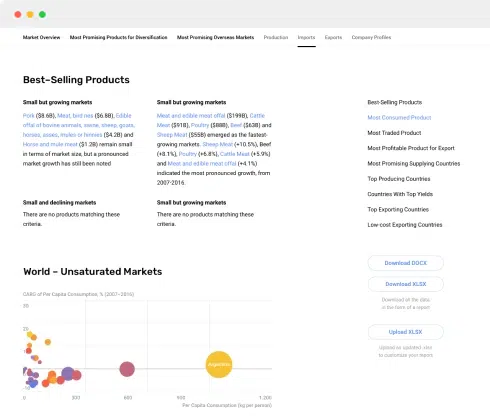
- BEST-SELLING PRODUCTS
- MOST CONSUMED PRODUCTS
- MOST TRADED PRODUCTS
- MOST PROFITABLE PRODUCTS FOR EXPORT
5. MOST PROMISING SUPPLYING COUNTRIES
Choosing the Best Countries to Establish Your Sustainable Supply Chain
- TOP COUNTRIES TO SOURCE YOUR PRODUCT
- TOP PRODUCING COUNTRIES
- TOP EXPORTING COUNTRIES
- LOW-COST EXPORTING COUNTRIES
6. MOST PROMISING OVERSEAS MARKETS
Choosing the Best Countries to Boost Your Export
- TOP OVERSEAS MARKETS FOR EXPORTING YOUR PRODUCT
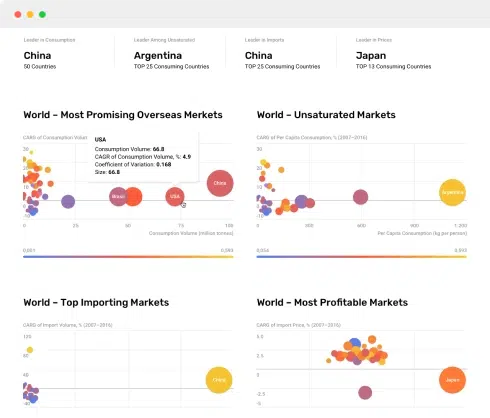
- TOP CONSUMING MARKETS
- UNSATURATED MARKETS
- TOP IMPORTING MARKETS
- MOST PROFITABLE MARKETS
7. PRODUCTION
The Latest Trends and Insights into The Industry
- PRODUCTION VOLUME AND VALUE: HISTORICAL DATA (2012–2024) AND FORECAST (2025–2035)
- PRODUCTION BY COUNTRY: HISTORICAL DATA (2012–2024) AND FORECAST (2025–2035)
8. IMPORTS
The Largest Import Supplying Countries
- IMPORTS: HISTORICAL DATA (2012–2024) AND FORECAST (2025–2035)
- IMPORTS BY COUNTRY: HISTORICAL DATA (2012–2024) AND FORECAST (2025–2035)
- IMPORT PRICES BY COUNTRY: HISTORICAL DATA (2012–2024) AND FORECAST (2025–2035)
9. EXPORTS
The Largest Destinations for Exports
- EXPORTS: HISTORICAL DATA (2012–2024) AND FORECAST (2025–2035)
- EXPORTS BY COUNTRY: HISTORICAL DATA (2012–2024) AND FORECAST (2025–2035)
- EXPORT PRICES BY COUNTRY: HISTORICAL DATA (2012–2024) AND FORECAST (2025–2035)
10. PROFILES OF MAJOR PRODUCERS
The Largest Producers on The Market and Their Profiles
-
11. COUNTRY PROFILES
The Largest Markets And Their Profiles
This Chapter is Available Only for the Professional Edition PRO- United States
- China
- Japan
- Germany
- United Kingdom
- France
- Brazil
- Italy
- Russian Federation
- India
- Canada
- Australia
- Republic of Korea
- Spain
- Mexico
- Indonesia
- Netherlands
- Turkey
- Saudi Arabia
- Switzerland
- Sweden
- Nigeria
- Poland
- Belgium
- Argentina
- Norway
- Austria
- Thailand
- United Arab Emirates
- Colombia
- Denmark
- South Africa
- Malaysia
- Israel
- Singapore
- Egypt
- Philippines
- Finland
- Chile
- Ireland
- Pakistan
- Greece
- Portugal
- Kazakhstan
- Algeria
- Czech Republic
- Qatar
- Peru
- Romania
- Vietnam
LIST OF TABLES
- Key Findings In 2024
- Market Volume, In Physical Terms: Historical Data (2012–2024) and Forecast (2025–2035)
- Market Value: Historical Data (2012–2024) and Forecast (2025–2035)
- Per Capita Consumption, by Country, 2022–2024
- Production, In Physical Terms, By Country: Historical Data (2012–2024) and Forecast (2025–2035)
- Imports, In Physical Terms, By Country: Historical Data (2012–2024) and Forecast (2025–2035)
- Imports, In Value Terms, By Country: Historical Data (2012–2024) and Forecast (2025–2035)
- Import Prices, By Country: Historical Data (2012–2024) and Forecast (2025–2035)
- Exports, In Physical Terms, By Country: Historical Data (2012–2024) and Forecast (2025–2035)
- Exports, In Value Terms, By Country: Historical Data (2012–2024) and Forecast (2025–2035)
- Export Prices, By Country: Historical Data (2012–2024) and Forecast (2025–2035)
LIST OF FIGURES
- Market Volume, In Physical Terms: Historical Data (2012–2024) and Forecast (2025–2035)
- Market Value: Historical Data (2012–2024) and Forecast (2025–2035)
- Consumption, by Country, 2024
- Market Volume Forecast to 2035
- Market Value Forecast to 2035
- Market Size and Growth, By Product
- Average Per Capita Consumption, By Product
- Exports and Growth, By Product
- Export Prices and Growth, By Product
- Production Volume and Growth
- Exports and Growth
- Export Prices and Growth
- Market Size and Growth
- Per Capita Consumption
- Imports and Growth
- Import Prices
- Production, In Physical Terms: Historical Data (2012–2024) and Forecast (2025–2035)
- Production, In Value Terms: Historical Data (2012–2024) and Forecast (2025–2035)
- Production, by Country, 2024
- Production, In Physical Terms, by Country: Historical Data (2012–2024) and Forecast (2025–2035)
- Imports, In Physical Terms: Historical Data (2012–2024) and Forecast (2025–2035)
- Imports, In Value Terms: Historical Data (2012–2024) and Forecast (2025–2035)
- Imports, In Physical Terms, By Country, 2024
- Imports, In Physical Terms, By Country: Historical Data (2012–2024) and Forecast (2025–2035)
- Imports, In Value Terms, By Country: Historical Data (2012–2024) and Forecast (2025–2035)
- Import Prices, By Country: Historical Data (2012–2024) and Forecast (2025–2035)
- Exports, In Physical Terms: Historical Data (2012–2024) and Forecast (2025–2035)
- Exports, In Value Terms: Historical Data (2012–2024) and Forecast (2025–2035)
- Exports, In Physical Terms, By Country, 2024
- Exports, In Physical Terms, By Country: Historical Data (2012–2024) and Forecast (2025–2035)
- Exports, In Value Terms, By Country: Historical Data (2012–2024) and Forecast (2025–2035)
- Export Prices, By Country: Historical Data (2012–2024) and Forecast (2025–2035)